

Mistfall Hunter Interview – Game Balance, Beta Feedback, PvE Mode, PC Features, And More
With PvPvE extraction RPG Mistfall Hunter coming to PC and consoles later this month, developer Bellring Games was kind enough to answer many of our questions. Subjects include the feedback from its various beta tests, how it aims to set itself apart in the crowded extraction genre, gameplay balance for various classes, and console performance, among other things.
Mistfall Hunter has already gone through multiple beta tests. What has been the most valuable feedback from players so far, and how has it changed the game?
After several rounds of beta, the most valuable feedback we received wasn’t any single point. It was a very clear consensus: players want Mistfall Hunter to keep its high-stakes tension, but they don’t want that pressure arriving too early, hitting too hard, or feeling unfair. That pushed us to make a lot of pressure-relief changes. We reworked the early game so progression feels smoother, overhauled core combat systems to soften the sting of failure, and added a no-shrinking-zone mode to the new map so players can explore more freely. To us, good pressure should come from decisions and mind games and not from a steep learning curve or losses that feel pointless.
The other key piece of feedback was how much players value the PvE side of the game. People often ask whether an action extraction game should lean PvP or PvE. Our take: PvE isn’t map filler. It sets the floor for every dive into the Mist. It’s what makes exploration, routing, resource investment, and in-the-moment judgment calls actually matter. So in upcoming versions we’re continuing to deepen bosses, map zones, and combat layers, while making sure the game never slides into a pure loot-grind PvE experience. PvE is the skeleton of a raid. PvP is the variable that truly changes the game.
Beyond that, so many passionate players sent us detailed suggestions on class mechanics and balance. That feedback has been enormously helpful in refining how each class feels to play.
The extraction genre has become increasingly crowded. Beyond the dark fantasy setting and RPG mechanics, what do you think makes Mistfall Hunter stand apart from other extraction games?
What really sets Mistfall Hunter apart isn’t just the dark fantasy setting or the RPG progression, it’s that we put genuine third-person action combat at the heart of the extraction structure.
Traditional shooter extraction games are built on sightlines, cover, holding angles, footsteps, and information warfare. In Mistfall Hunter, those duels get rewritten: attack direction, wind-ups and recovery frames, dodge-roll timing, stamina management, weak-point targeting, skill trades, and squad positioning. It’s not about who scopes in first. It’s about who can execute a full sequence of actions, resources, and risk calls more completely… and who can sync with their teammates so that one plus one is far greater than two.
And we didn’t just stack action, PvE, PvP, and extraction on top of each other. We worked to make them interact within a single raid. Fighting a boss, looting, reading the situation, deciding whether to push your luck, and then that heart-pounding extraction: it’s all one continuous experience. We didn’t simply swap gunplay for melee. By building around squad-based action combat, we restructured the levels and progression systems from the ground up into one organic whole. The result genuinely feels new.
Have you ever considered adding PvE-only modes or PvE-focused content for players who are interested in the world and combat but less interested in direct PvP?
We’ve thought about this seriously, and internally the answer is clear: a pure PvE mode is on the roadmap. We just can’t commit to a firm date yet given our current production bandwidth.
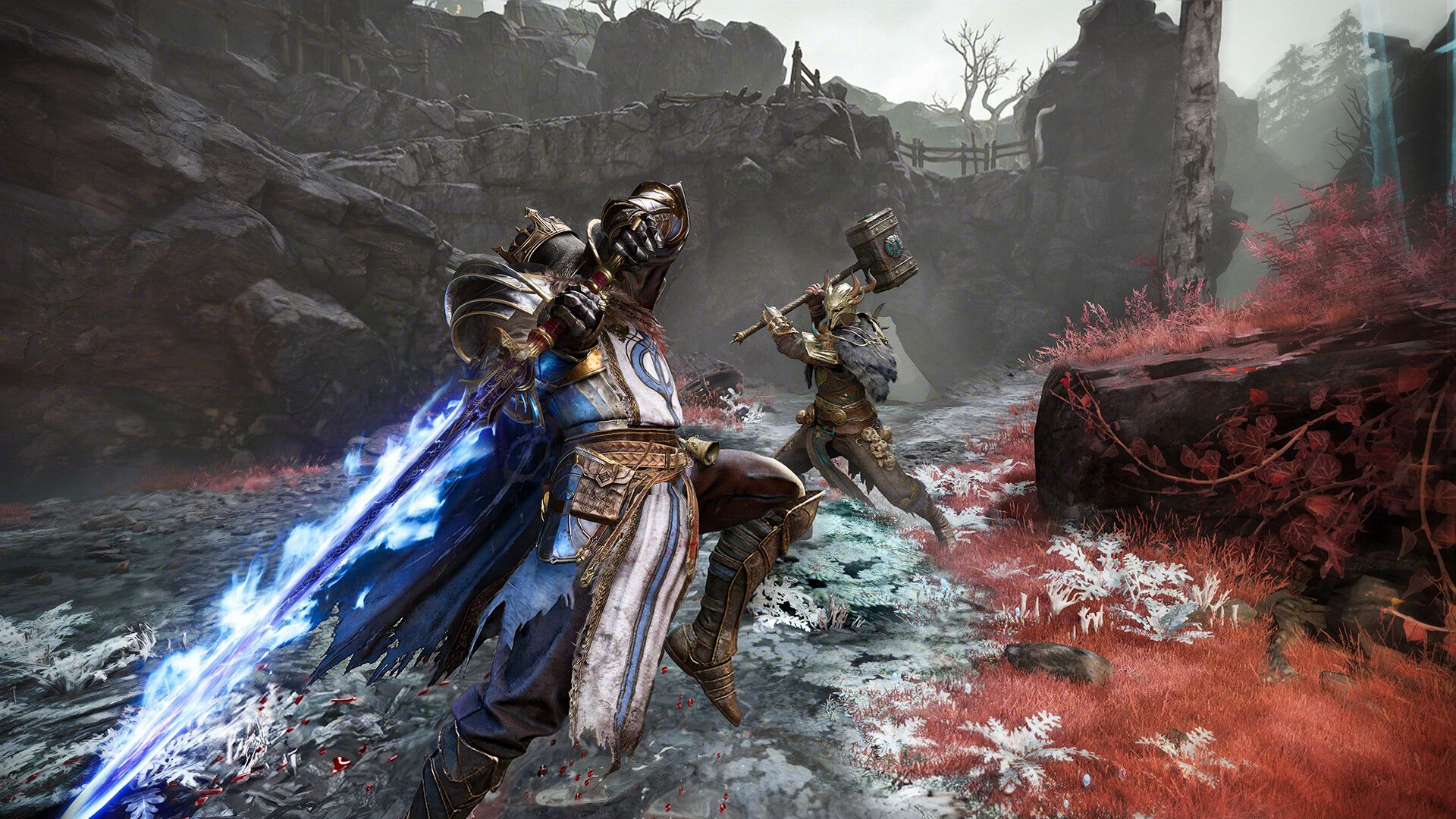
Beta feedback showed plenty of players who love the world, the bosses, and the action combat but don’t want the constant pressure of direct PvP. We get it and it’s a completely fair ask. Our approach isn’t to strip the risk out entirely, but to make sure players with different preferences can each find their own way into Mistfall Hunter.
Right now, our priority is continuing to polish the core PvPvE experience while steadily adding richer PvE content, practice scenarios, and low-stakes ways to learn the combat. Post-launch plans already include things like a PvP practice/brawl mode where you can get comfortable with the combat system without putting everything on the line. Pure PvE is still coming, we just want to make sure it fits the long-term ecosystem rather than splitting the game into two disconnected products.
Players can go in solo or as part of a squad. How different is the experience for lone-wolf players compared to three-player teams?
Solo and three-player squads are, at their core, two completely different rhythms.
Going lone-wolf is all about stealth, routing, reads, and risk decisions. You have full control of your own information, you move more freely, and it’s easier to avoid fights, slip around them, or cherry-pick your targets. The trade-off: your margin for error shrinks, and every mistake gets magnified.
A three-player squad is more like a tactical system. Class synergy, positioning, focus fire, peeling for teammates, and resource distribution all swing the outcome. Teams handle high-intensity PvE more reliably and can pull off combos and baits in PvP, but the cost is more communication overhead, a bigger profile on the map, and real organizational pressure when it’s time to extract.
Our goal isn’t to make the two identical: it’s to make each one work on its own terms. We’ve already done dedicated monster placement and mode design for solo play in testing, and we keep a close eye on solo class balance, because the same class in solo versus squad play is often two entirely different problems to solve.
One more thing: through skills, talents, and items, we’ve made it genuinely viable for solo players and duos to queue into three-player matches short-handed. In our last test, a lot of players tried exactly that and had a blast doing it.
What were some of the biggest balance challenges when designing very different playstyles, especially when some players focus on melee aggression, others on ranged pressure, and others on magic or support?
The biggest challenge isn’t getting every class to a similar win rate, it’s making sure every playstyle has room to succeed somewhere.
Mistfall Hunter has a lot of balance dimensions. Solo is different from squad play. PvE is different from PvP. Low gear is different from high gear. Players who prefer farming up, running loot routes, or actively hunting fights are all different again. Melee aggressors live on close-range pressure and engagement timing. Ranged classes care about space control and damage windows. Magic and support classes add another layer entirely: how do you translate utility into combat value? Stack all of that together, and any single strength can get amplified in a scenario you never expected.
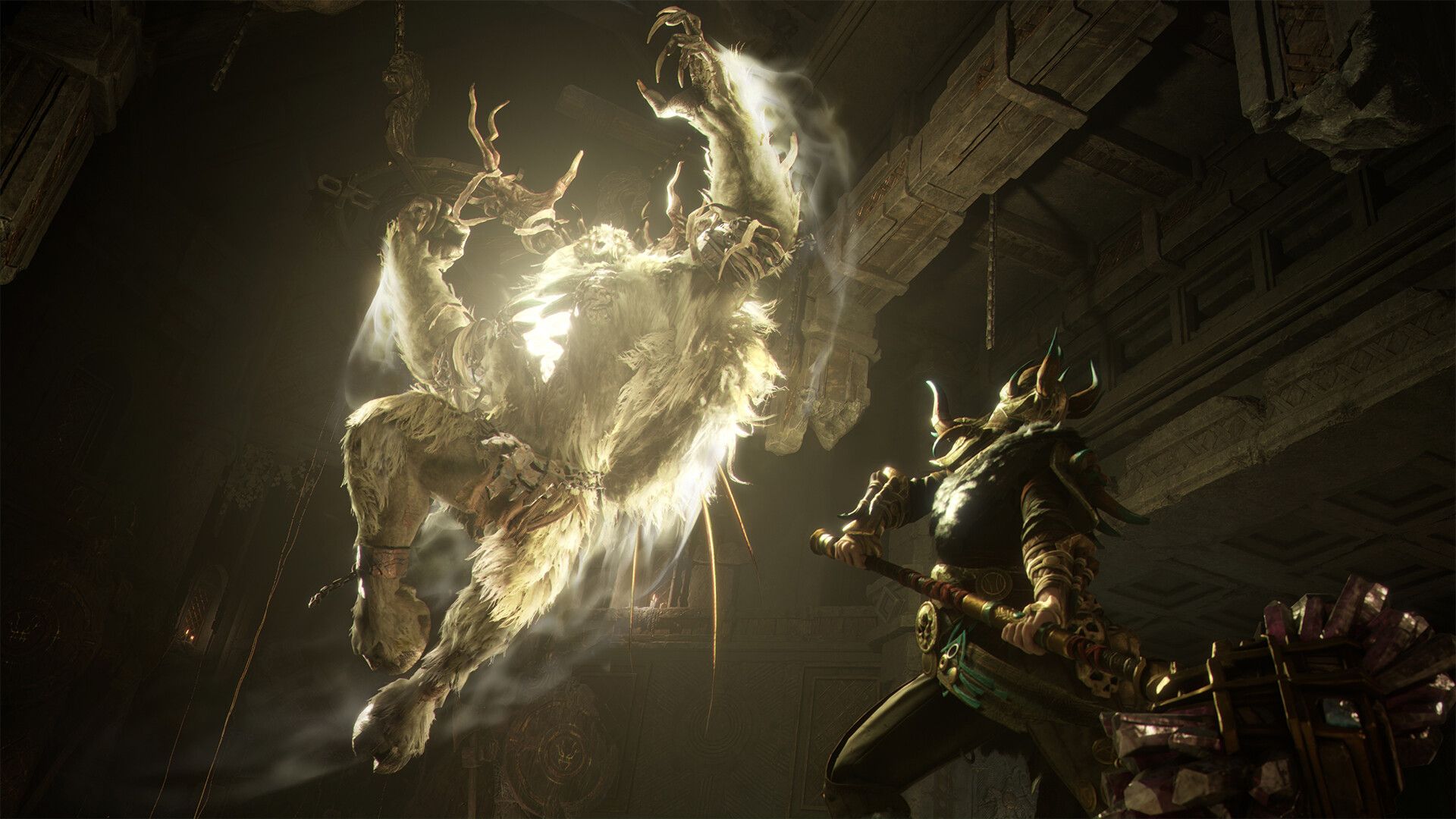
“Mistfall Hunter has a lot of balance dimensions. Solo is different from squad play. PvE is different from PvP. Low gear is different from high gear.”
So our philosophy isn’t chasing a static “perfect balance.” It’s continuously watching data, feedback, and real match scenarios to make sure every class has clear strengths, clear weaknesses, and clear counters. Balance isn’t sanding every character down into the same shape, it’s making sure players understand why they lost, and why they won.
Honestly, beyond balance, what we care about most is variety. We want every class to support as many viable builds as possible, each with an environment where it shines so combat stays rich, colorful, and full of surprises.
How challenging has it been to balance utility and support-focused magic against more damage-oriented classes, especially in PvP situations?
This one is genuinely hard, because utility abilities break out of numerical frameworks by nature.
With a damage class, strength is easy to feel: bigger numbers are bigger numbers, and a higher execute threshold speaks for itself. Support and utility are different animals. Heals, shields, invisibility, crowd control, blinds, roots, escapes, repositioning – none of it shows up on a stat sheet, but in PvP it can completely reshape the tempo of a fight and how much room for error each side has.
Take the Seer, one of our support-leaning designs. We want it to bring real team value, not a “fake support” nobody picks unless the numbers are overtuned. But we also can’t let it erase every other class’s risk through pure utility in coordinated, high-level squads. In an extraction game especially, anything that lowers extraction risk, improves clutch potential, or changes the terms of an engagement is far more sensitive than raw damage.
So we’re deliberately cautious here. Strong support tools like healing and control get introduced and tuned very carefully. Utility classes should absolutely be able to swing a fight, but casting those abilities should always carry a real decision cost.
Since death means losing your spoils, how do you balance punishment with long-term progression so that players still feel they are making progress even after a bad run?
This is one of the core questions of the entire extraction genre. We’ve always believed death has to cost something and without that, extraction means nothing. But if one failure makes players feel like all their time just evaporated, long-term retention doesn’t work either.
So our approach isn’t to soften the risk itself. It’s to protect the feeling that “even if I lost this raid, it wasn’t wasted.” That feeling comes from a lot of places: you know the map and its monsters better, you understand your class and build more deeply, you’ve upgraded your camp, you’ve unlocked more permanent out-of-raid abilities, you’ve learned sharper risk decisions… or you simply know where not to get greedy next time. All of that is progression.
On the design side, we keep building pressure valves too. We tested a spirit-run revival mechanic to soften early PvE frustration, we’ve continued improving the performance of Pip’s Pocket, and our matchmaking has gotten smarter about keeping players out of that miserable loss-streak-into-bankruptcy spiral.
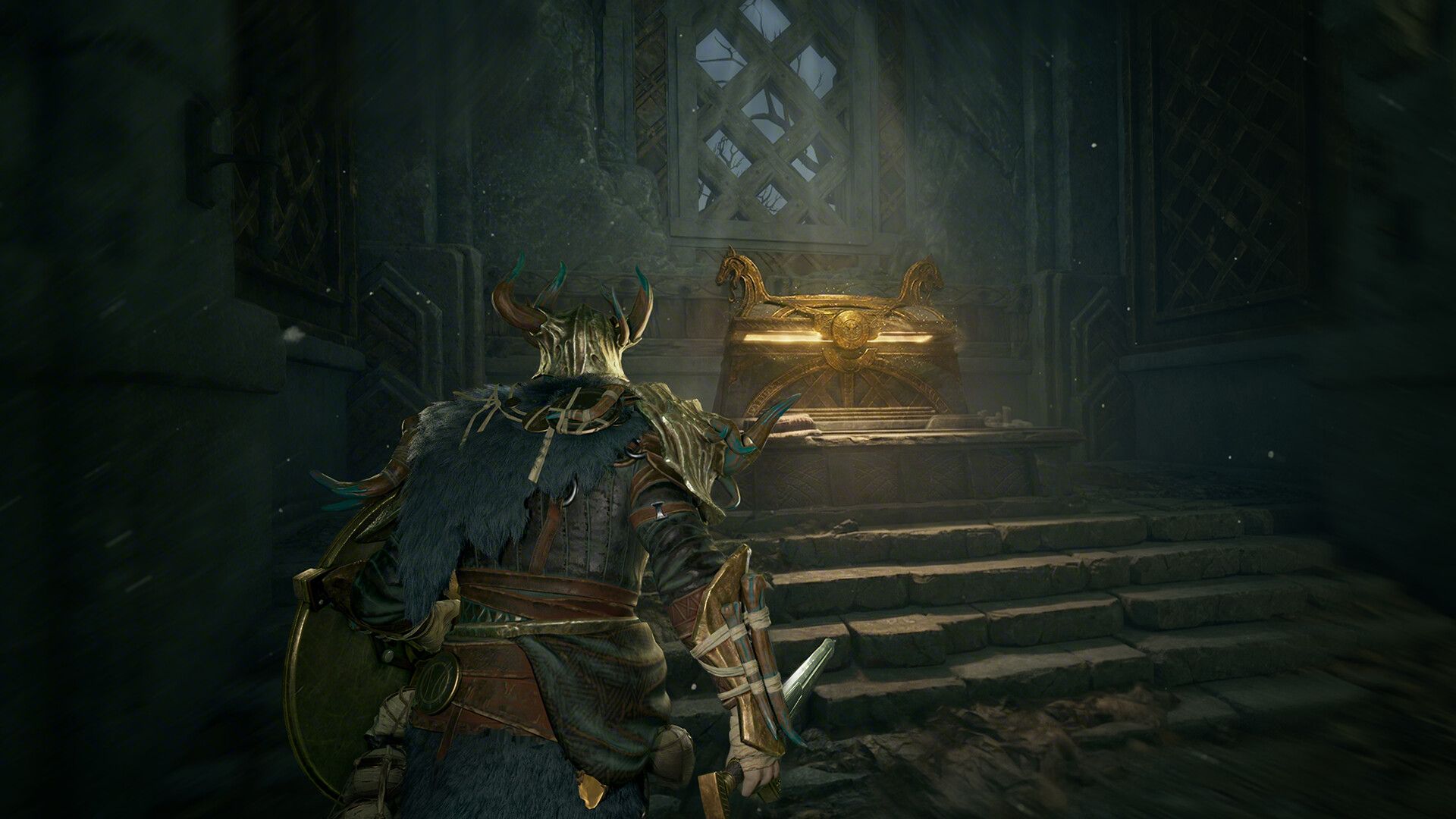
“Our approach isn’t to soften the risk itself. It’s to protect the feeling that “even if I lost this raid, it wasn’t wasted.””
What resolution and frame rate targets are you aiming for on PS5, Xbox Series X, and Xbox Series S? Will there be separate Quality and Performance modes?
Yes — there will be separate Quality and Performance modes on consoles.
The PS Store listing mentions PS5 Pro optimization. What improvements can players expect on PS5 Pro?
PS5 Pro players can expect the most refined console version of Mistfall Hunter. The additional GPU headroom lets us push higher rendering resolutions and more stable frame rates across both Quality and Performance modes, along with sharper image quality through enhanced upscaling.
In a game where reading an enemy’s wind-up or nailing a dodge-roll can decide whether you extract with everything or lose it all, that extra clarity and smoothness genuinely matters. We’ll share exact PS5 Pro details closer to launch.
Are you using DualSense features on PS5, such as haptic feedback and adaptive triggers, to make melee attacks, parries, or extraction moments feel more physical?
Not at launch, but DualSense support is absolutely on our radar. Haptic feedback and adaptive triggers are planned to roll out gradually in future updates. Melee impacts, parries, and those white-knuckle extraction moments are exactly the kind of thing that deserves to be felt in your hands, and we want to do it right.
Since Mistfall Hunter is coming Day One to Xbox Game Pass, how does that affect your expectations for the launch community, matchmaking population, and long-term support?
For us, the biggest win of launching Day One on Game Pass is speed: we can build a genuinely multi-platform, multi-audience community from the very first day. For an extraction PvPvE game, community size, matchmaking pool quality, and the diversity of classes and playstyles you run into all directly shape the player experience.
Game Pass lowers the barrier for players who might have stayed on the fence: they can jump in, try our combat, and explore our world, and that makes the whole ecosystem healthier. But it also raises the bar for us. It means the launch version has to deliver on stability, anti-cheat, fair matchmaking, and a strong content update cadence. We take that responsibility seriously.
Will Mistfall Hunter support full cross-play and cross-progression across PlayStation, Xbox, Steam, and Xbox on PC?
Full cross-play is supported across PlayStation, Xbox, Steam, and Xbox on PC. Everyone plays together.
For cross-progression: Xbox and Xbox on PC share progress with each other. The other platforms do not currently support cross-progression.
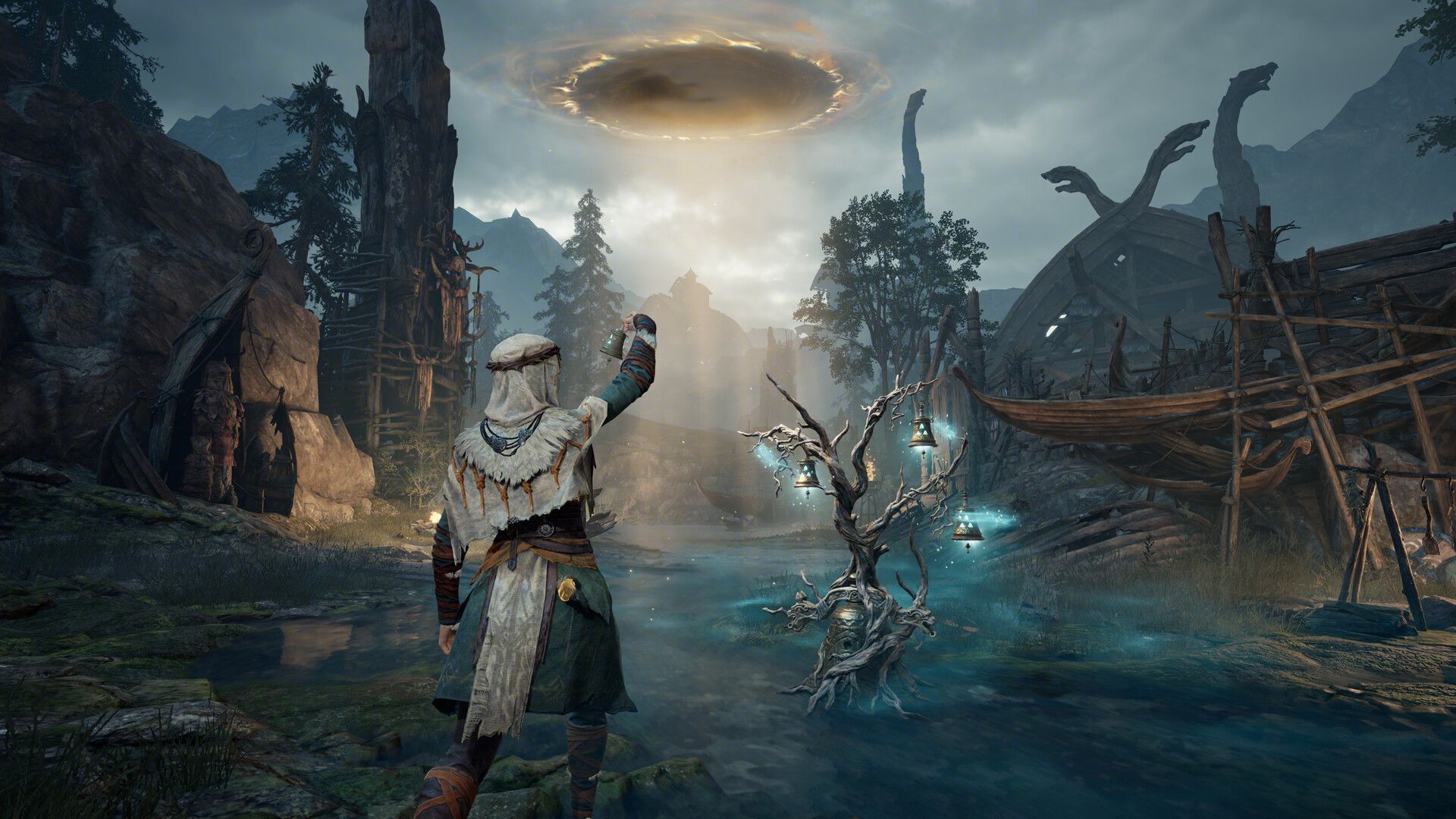
“Game Pass lowers the barrier for players who might have stayed on the fence”
For PC players, what can you tell us about system requirements, graphics options, ultrawide support, unlocked frame rates, anti-cheat, and upscaling technologies such as DLSS, FSR, or XeSS?
Happy to run through the full list.
Minimum Requirements
- OS: Windows 10 64-bit
- Memory: 12 GB
- CPU: Intel Core i7-4770 / AMD Ryzen 5 1400
- GPU: NVIDIA GeForce GTX 1060 / AMD Radeon RX 580
- DirectX: Version 12
Recommended Requirements
- OS: Windows 10 64-bit
- Memory: 16 GB
- CPU: Intel Core i7-9700 / AMD Ryzen 5 3600
- GPU: NVIDIA GeForce RTX 2070 / AMD Radeon RX 5700 XT
- DirectX: Version 12
Graphics options: PC players get a deep suite of custom settings, including anti-aliasing/upscaling method, upscaling mode, DLSS frame generation multiplier, ray tracing, shadow quality, view distance, texture quality, effects quality, post-processing, motion blur, and global illumination.
Ultrawide support: Yes, fully supported.
Unlocked frame rates: There is no frame rate cap on PC.
Upscaling technologies: We support TSR, TAAU, DLSS 4.5, and FSR 3.
Anti-cheat: Mistfall Hunter uses Bellring Anti-Cheat, backed by a dedicated anti-cheat team. We won’t pretend it’s been a spotless journey! Beta 2 saw some fairly aggressive cheats. But we eradicated those vulnerabilities, and across our last two tests the game ran clean and stable. Our countermeasures against both cheating and illegal teaming keep maturing, and protecting fair play is a commitment we intend to keep long after launch.
Comments are closed.