

Why Does Metal Gear Solid 5 Still Feel Unmatched So Many Years Later?
You’ve probably found a sneaky path to the end of Guns of the Patriot and Peace Walker over the weekend or perhaps come close, and might be wondering what comes next after Metal Gear Solid: Master Collection Vol. 2. If you’re a franchise veteran who visited the collection for nostalgia, you already know the answer to that, with the only question being if Episode 51 is finally going to see the light of day.
If you don’t know what we’re talking about, you’re probably among the lucky few who are new to Metal Gear and are currently living through a phantom pain that we’re all too familiar with. Metal Gear Solid V: The Phantom Pain is among the most potent entries in the franchise’s extensive library, and although it did draw its fair share of criticism, its gameplay formula remains as thrilling as it’s ever been, and that’s saying something considering that we’re talking about an eleven-year-old game here.
[embedded content]
So why haven’t we seen anything like it in the decade that’s now passed? As always, we’ve got thoughts on the subject we’d like to share, so strap in!
The Freedom Of The Shadows
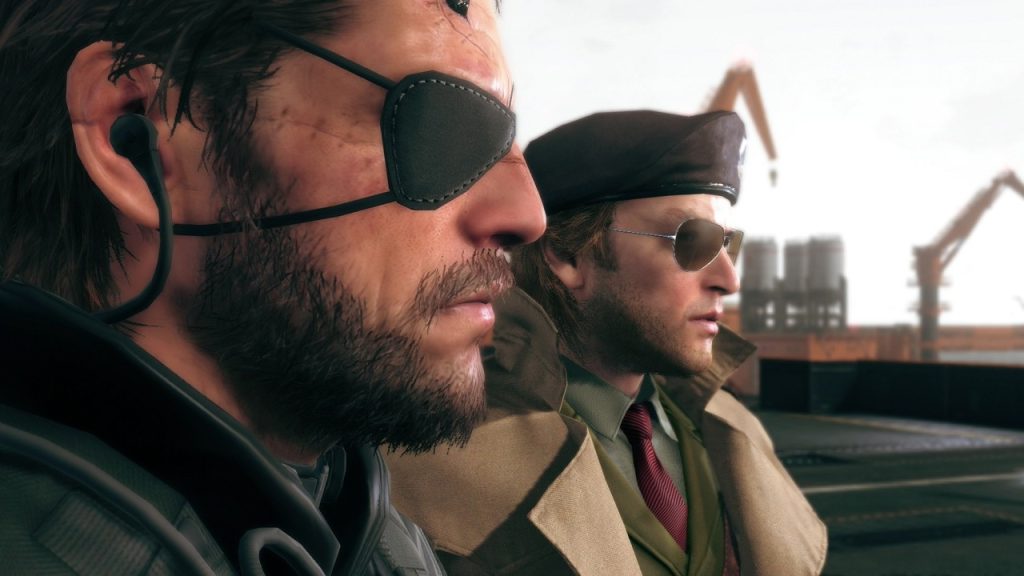
As a story with “Big Boss” at its center, this one definitely gives its take on the iconic character a gameplay loop that takes advantage of his extensive experience and his innate tactical proficiency to make it a power trip like no other when you nail down its mechanics. It helps that everything is so responsive, with animations for sprinting, diving, crouching, and taking cover feeling so seamless as you flit between safe points in pursuit of that pesky guard and a quiet place to deal with them.
That the animations worked so well while still feeling responsive made MGSV already ahead of its time, and we’d say that they’ve held up pretty well despite a new generation of hardware coming along to make things easier for developers. It’s an underappreciated facet of the experience that we felt deserves a special mention thanks to how fluid Big Boss felt in our hands, which made everything we did with him all the more immersive as a result.
Of course, that fluid movement came in very handy when engaging with stealth systems that gave you an unprecedented amount of freedom to deal with your objectives as you wished. Taking a quiet approach to the problems you were tasked with solving felt akin to a sandbox rather than a curated route through heavily guarded areas, an approach that was all too common for stealth-action titles at the time.
You had sniping, CQC, distractions to employ, vehicles to deploy, the Fulton system to ensure your Mother Base was a constantly evolving safe space that was able to fuel your mission, a bevy of very useful companions, helpful supply drops, and so much more in a world that felt like it was constantly responding to your presence in it, and evolving based on your actions. That evolution is most prevalent in the way enemies responded to your tactics in the game.
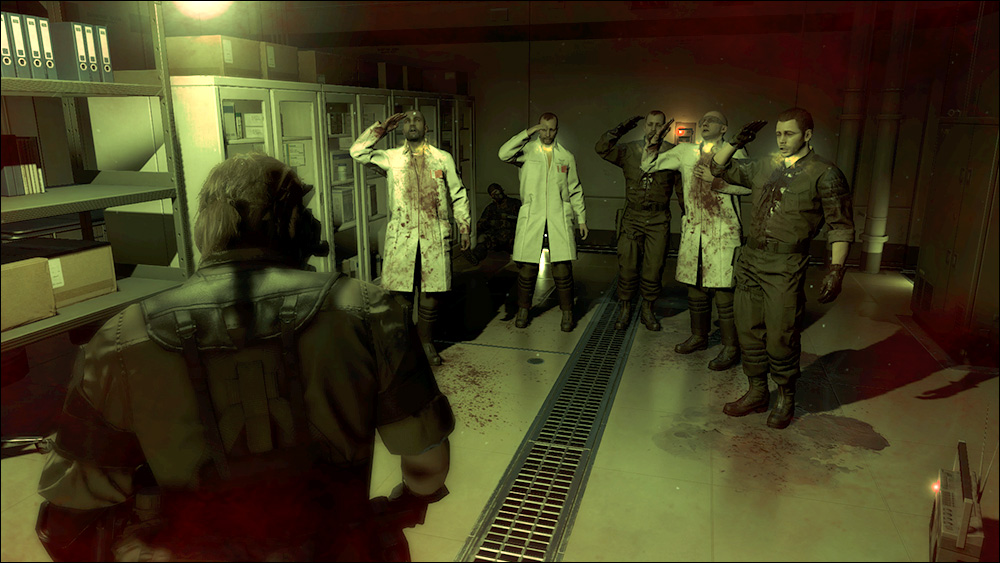
An emphasis on taking a tactical approach was underlined by an enemy AI that was smart enough to take note of ways you were exploiting it, and actively counter such efforts. Take out too many guards with headshots, and you quickly find that they come equipped with helmets. Using the cover of darkness to hide your approach sees them bring night-vision goggles and flashlights to the table. Take a closer and more personal approach, and they’re going to don armor to balance out the obvious difference in your skills.
It’s something that makes you feel like the world is recognizing Big Boss as the deadly threat you know he is, and it’s easy to let that power get to your head, only to be humbled by systems that punish a reckless approach unless you’re well-armed and skilled enough to survive the fight. That was a good thing in a game where a static enemy difficulty made way for systems that were designed to prevent you from forming safe habits.
That immediately encouraged experimentation in a world designed for it, and getting spotted was simply an opportunity to pull off a daring escape, evading your enemies to return to the shadows where you could pick them off one by one. It’s great that no one’s ever really safe in the field in Phantom Pain, as it immediately makes engaging with all that it’s offering a very addictive part of the experience.
An Intuitively Intersectional World
All of the innovative gameplay in the world couldn’t have made a difference if the world Big Boss was operating in didn’t support the fantasy that Phantom Pain was selling. Fortunately, Afghanistan and Africa had so much going on that they were far from the checklist-like open worlds that were kind of a rage back then, and continue to be a part of the genre’s offerings even today.
Events unfolded so organically it was difficult to see the game’s systems pulling your strings behind the scenes, pointing you towards new places and new activities in ways that were so organic, and often dynamically unfolding, that you were immediately compelled to see things through. The very ground felt like it existed to give you as many opportunities to approach your objectives in your own way, with terrain that was varied enough to encourage a tactical approach with a variety of options always close at hand.
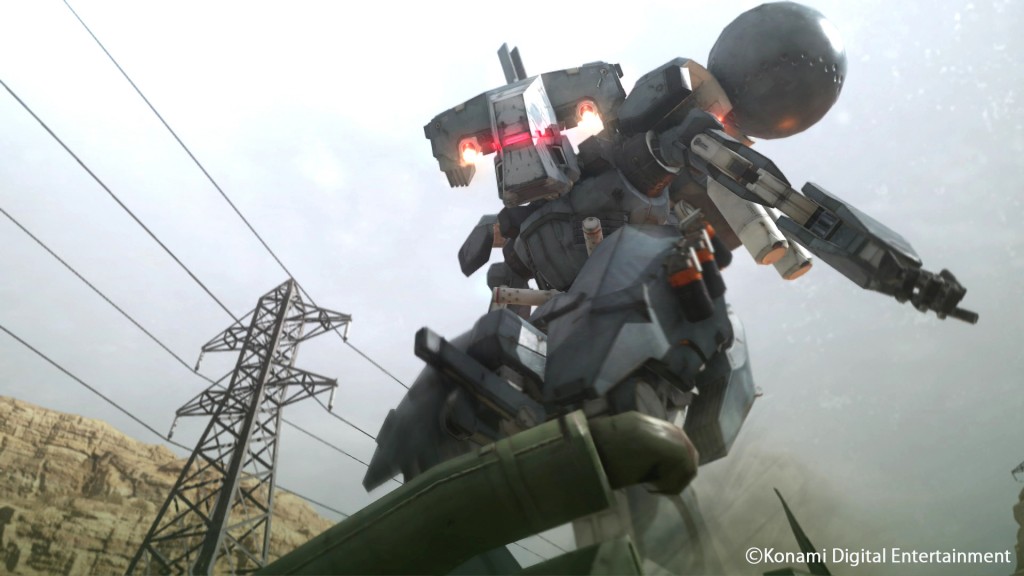
With every outpost you discovered being a large, tactical playground for you to play with as you saw fit, it’s very good that all of the game’s systems came together to create an intersectionality that was an almost tangible presence alongside your Buddies (more on that in a bit). The weather and time-of-day systems affected visibility across the board, and immediately created choices about when to attempt an infiltration and what kind of tools to bring along for the job. Guards and patrols would switch up too, creating a dichotomy in a single location that you were then tasked with navigating.
You could choose to destroy any infrastructure focused on communications, which would then affect your enemy’s ability to call in reinforcements once they realized you were definitely above their pay grade. You could recruit enemies to your cause, using Fulton to feed your mother Base, which would in turn churn out better gear, which meant more opportunities for infiltrations and general mayhem.
Those interconnected systems form a sort of net that wraps around you from the second you’re let loose in the world, making for a very addictive gameplay loop that we like to revisit every now and then even after all these years. Your Buddies were yet another layer thrown into the mix, each one bringing unique functionalities that had a tangible impact on how you approached missions or objectives in the field.
Remember that emphasis on experimentation we were talking about with respect to the world in general? That applies to what you’re bringing along in your pockets as well, with an expansive arsenal that gives you a lot of flexibility in how you want to tackle a situation while remaining balanced enough to ensure that Big Boss didn’t feel too overpowered once he got his hands on better gear. Each of those tools, including but not limited to sleep grenades, decoys, cardboard boxes, the Fulton device, launchers, water pistols, mines, and all of the support options you had, was unique and came with wide use cases thanks to the world creating them.
Many games have since brought massive arsenals for the protagonists to make use of in their stories. But MGSV’s focus on systemic application of those tools automatically elevates it above anything else on offer. Of course, there are titles that try to emulate its unique vibe with varying levels of success.
Forms Of Flattery
Ghost Recon Wildlands and Breakpoint are probably good points of comparison, as they did recreate a military sandbox with an emphasis on a tactical approach with weapons, vehicles, and a lot of other common factors. But both games didn’t have MGSV’s depth in their systemic interactions or adaptive enemy behaviour to make all of it stand out. Hitman did take a philosophically similar approach to stealth sandboxes, but its vibe was a different expression of stealth sandboxes. Sniper Elite 4 and 5 are also great ones to look at, as they were titles that put you in a large map and largely left you to your own devices to figure things out.
Dishonored 2 was quite close to the systemic ambition of MGSV, but didn’t quite manage to recapture the magic thanks to its authored levels instead of the open-world chaos. Each of these games reproduced a piece of Phantom Pain, but largely failed to surprass in a way that recaptured what made it so special in the first place. Why is that?
Well, a game like that needs a lot of sophistication, with its AI, animations, systems, player tools, controls, and environments all supporting a sandbox-styled presentation and gameplay loop. That’s easier to dream about than to actually build, since every new mechanic would need to be worked into all of the game’s systems and woven into the countless interactions that they would encourage.
Combine that with today’s focus on bigger maps, scripted spectacle in key moments, RPG progression systems, seasonal content, and experiences that are too authored to allow for the kind of player freedom that was on offer in MGSV, and you begin to see why it’s a game that continues to remain unique. Its very philosophy is something that’s difficult to scale, and perhaps even not profitable to attempt, considering the complexity that belies the seamless interactions that we see in the game.
MGSV was far from perfect, but it has managed to create a lasting legacy. It’s remarkably difficult to find anything that comes close to it, and the surprising part isn’t that there haven’t been any attempts to iterate on it. But what makes it stand out is that it has remained elusive to those efforts even more than a decade after its release. That’s almost as magical as the time you spend in its world, and that’s the highest possible compliment we can give it.
Note: The views expressed in this article are those of the author and do not necessarily represent the views of, and should not be attributed to, GamingBolt as an organization.
Comments are closed.