

One Daniil Dankovsky in a mirror, now a thousand pieces of Daniil Dankovsky in a mirror,” says the protagonist of Pathologic 3 when going a’ smashing. It’s a fitting metaphor for his see-sawing psyche and time-traveling escapades while teasing the main hook of its gameplay. Are all those broken pieces really the same Dankovsky? Can they really be the same, even when smashed further and further?
Of course, of the many riddles that Pathologic 3 presents, that’s probably the least immediate, especially when the sickness comes rolling in. Much like its predecessors, Ice-Pick Lodge sends you off into Town-On Gorkhon, a mysterious place where the Earth feels as alive as it does malevolent, and where survival may as well be theater, one where you’re the audience, director and editor. More inviting yet still deceptively luring you into its many systems and nuances, you’re continuously kept off-base, each new development adding a further wrinkle to this canvas of death.
[embedded content]
“The fact that districts are now separate areas that you have to plan routes through is also an interesting twist over Pathologic 2, even if the number of loading screens, as quick as they may be, can feel a tad excessive.”
Not that Dankovsky is any stranger to the deceased or any less morbidly fascinated by the same. As the lead of Thanatica in the Capital, he’s constantly on the lookout for ways to circumvent death. So when he’s informed of an individual named Simon Kain who seemingly did just that, Dankovsky packs his bags and ventures to the town for a meeting. Things seem innocent enough at first – the local children stealing his tools, the local adults debating with a Herb Bride about taking away a corpse – but it’s not long before you’re suddenly in an interrogation room.
The town has fallen, and it’s all your fault. While retracing your steps unfolds various vital details on how that happened – Dankovsky apparently let many good folk down – it also leads to an inescapable dead end. That is, until a mysterious Shadow – those masked individuals in black bodysuits – teach Daniil about the fracturing of time, and returning to previous days to maybe, possibly, alter fate. Break a leg and some more mirrors, to fund those trips, Dankovsky.
By venturing through previous days, you can relive their events, perhaps prevent the deaths of those who may offer more information or assistance. A handy Mind Map is available to keep track of new threads and occurrences on each day, oftentimes pointing to key individuals (and their fate if you’re too late to intervene). What makes Pathologic 3’s plot so compelling is that it presents new mysteries even as you travel on well-worn ground.
Your first trip back, for example, has you encountering the mysterious Eva Yan, within the confines of the even stranger Stillwater, where you’ll prepare solutions for your Prototype – a tool used to ward away the miasma – among other things. From there, you can head to Town Hall – a relatively peaceful journey to its door, compared to the rushed escapade on Day 5, which saw you lighting bonfires while fighting off the plague. Alternatively, you can choose to venture to the southern part of town, currently in the midst of riots, to find a key character and save them. That’s after racing through an infected district where the plague made manifest, Shabnak, stalks you, by the way, though it’s worth it to find a flower that could help in studying the infection. The fact that districts are now separate areas that you have to plan routes through is also an interesting twist over Pathologic 2, even if the number of loading screens, as quick as they may be, can feel a tad excessive.
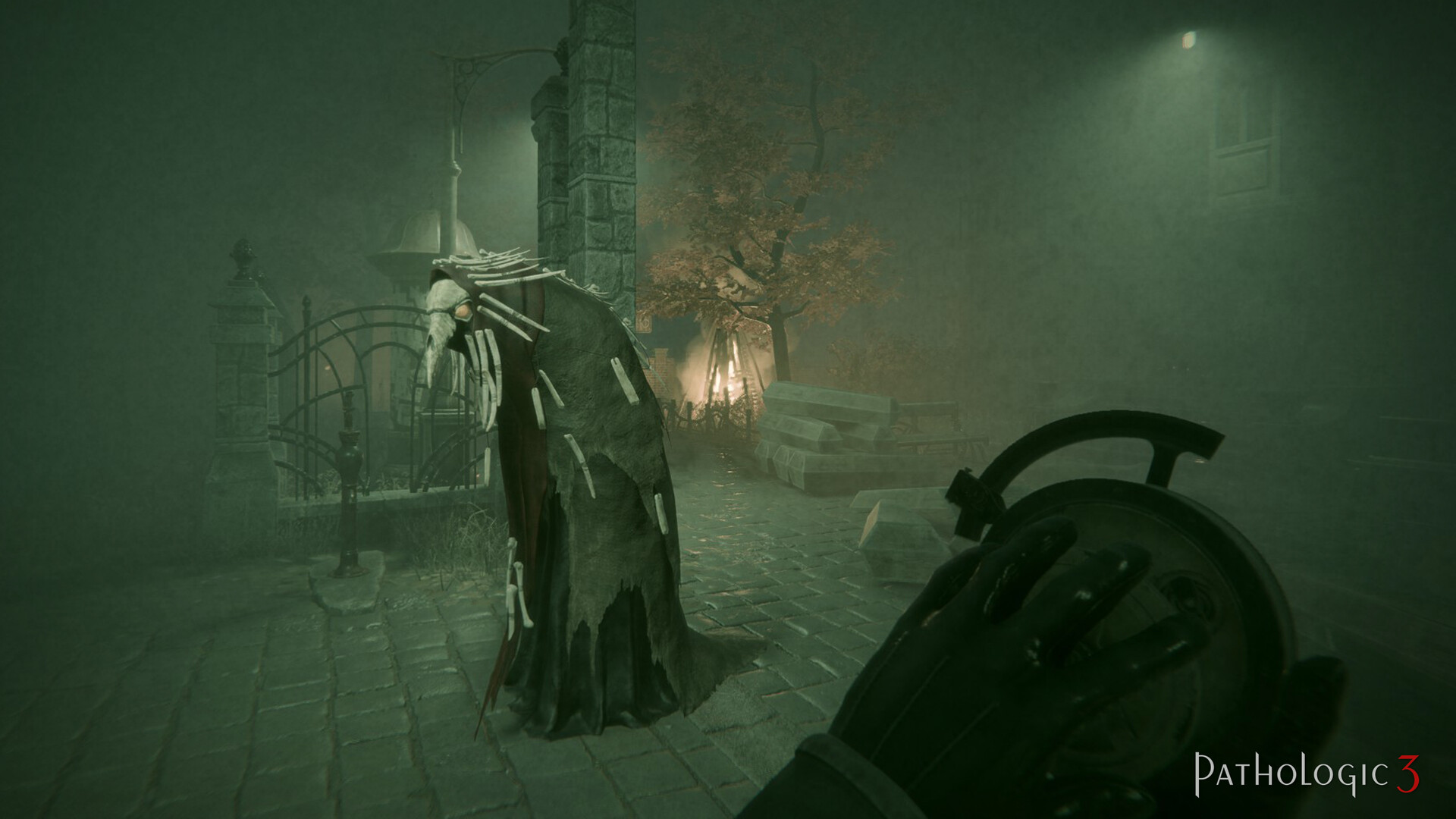
“The sheer variety of characters is incredible, from the disarming and quaint to the mischievous and manipulative. The fact that you can’t always tell at first glance makes them that much more interesting to talk to, if the fantastic dialogue wasn’t enough.”
It’s a lot to take in, for sure, but Pathologic 3 dances around details as much as it pushes others to the foray. Heavily conversation-based, the paucity of voice acting can at times make these feel much more imposing than they actually are. But that’s one of the beautiful things about the game’s writing. Beyond each character having their own secrets to hide, you also need to consider Daniil’s mental state, represented by apathy and mania. So while it seems normal enough to admit that you failed and apologize, it can fuel the former – delve too much into the doldrums, and a self-inflicted gunshot wound awaits. However, getting too excited, too irritable, kicking things around, or even just messing with see-saws can result in Daniil giving up due to the sheer frenzy. But then again, it may be worth the movement speed buff, especially when trying to avoid the Shabnak.
As such, balancing both of these is as essential as taking the measure of a person to find an answer, which I appreciate. It means you need to be tactful or downright bizarre, even in times when you want to show sympathy, if only to not turn manic. There are various consumables available to help on that front, from coffee to morphine, but some can carry side effects. Each new day also means having to build out your inventory from scratch, yet I never found it especially punishing, thanks to paying close attention to your surroundings to loot more or trading walnuts with the kids.
The sheer variety of characters is incredible, from the disarming and quaint to the mischievous and manipulative. The fact that you can’t always tell at first glance makes them that much more interesting to talk to, if the fantastic dialogue wasn’t enough. Combat is also a factor, but more so the threat than the actual body count. Oftentimes, it can be as beneficial to threaten bystanders, especially if you’re low on ammo. You might want to be careful about taking too many lives, since it makes Daniil really apathetic to the concept of living.
This brings up the trial-and-error aspect of the Pathologic experience. At times, you can shrug off multiple attacks from the Shabnak, though that damage can build up over time (not to mention the plague raising your apathy). On the other hand, shooting two people is enough to pretty much end your life. The time-traveling aspect also factors in saves, and while I’m fine with this, venturing back to Stillwater, the starting area, after obtaining a plague flower in one district and subsequently giving up on life from shooting too many rioters in another, can feel annoying. Then again, trial and error. It’s the game’s way of teaching you that going in, guns blazing, isn’t the solution.
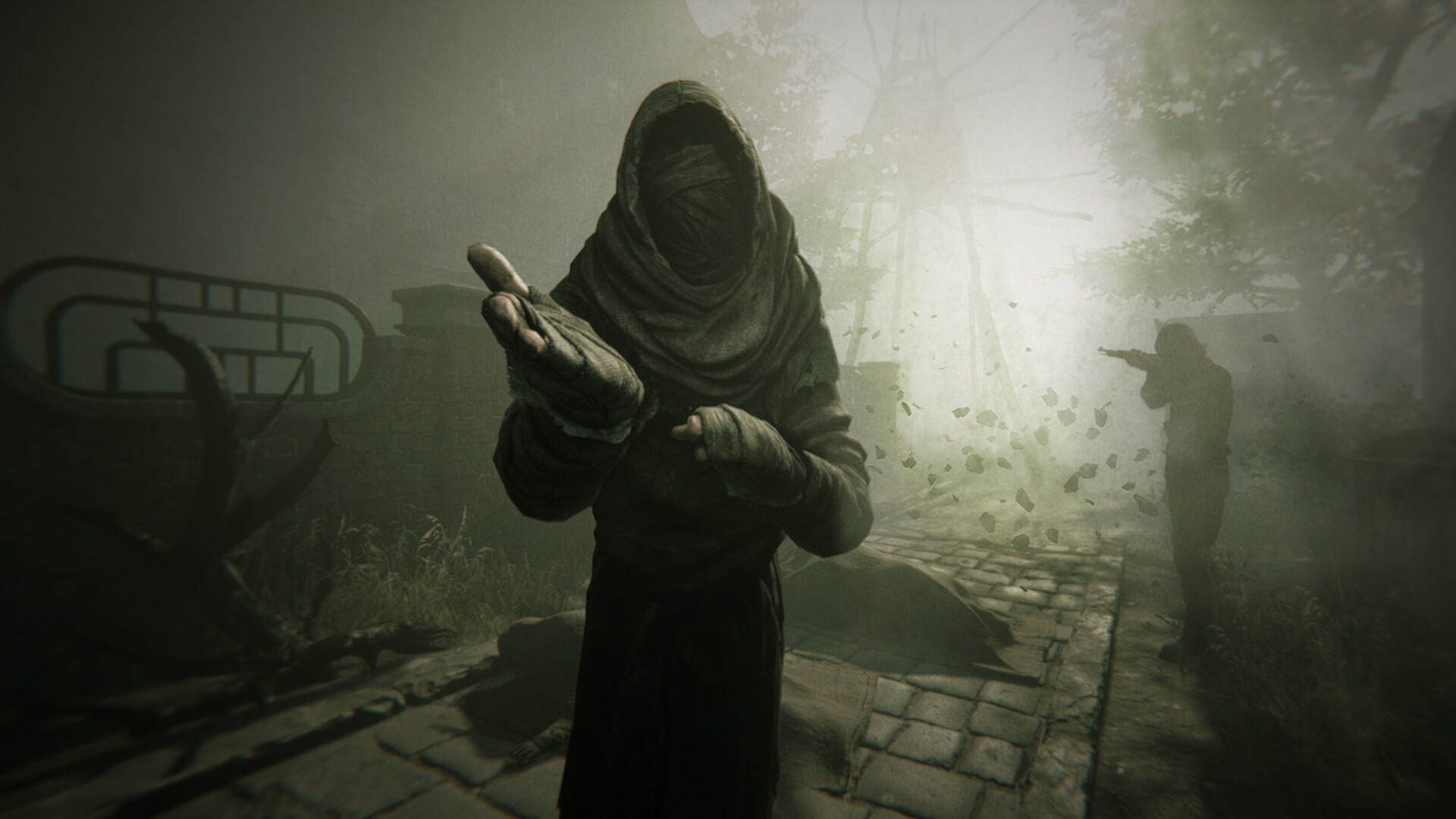
“While leaning on survival horror, the psychological aspects go far deeper, and trying to save the town alongside unravelling the core mystery, which presents its fair number of shocks, can be as disorienting as it is addictive.”
Other lessons could stand to be less harsh, though, like accidentally softlocking myself in a confined area with no way to escape – not a jump button for getting past the waist-high hedge. The prototype, which has limited uses, can also feel a bit weird at times. After dispelling the plague and then having to deal with the Shabnak, immediately prepping it again would have no effect while still consuming the use. Not the best feeling, especially when both threats can assail you as many times as they’d like until you leave the affected district.
Even with these caveats – and some stiff facial animation in some places – Pathologic 3 is a much better follow-up, and perhaps the best game in the series for fans to get into. While leaning on survival horror, the psychological aspects go far deeper, and trying to save the town alongside unravelling the core mystery, which presents its fair number of shocks, can be as disorienting as it is addictive. Just remember to stay patient throughout and value the lives of those around you, endlessly complex as they may be.
This game was reviewed on PC.
Comments are closed.